2026-10-01
Skin Diagnosis: How AI Analyzes Skin Conditions Hard to Detect with the Naked Eye
Discover how Girin Plastic Surgery's Cellogic AI skin diagnosis analyzes skin age, hydration, pores, and tone with objective data to design personalized care plans.
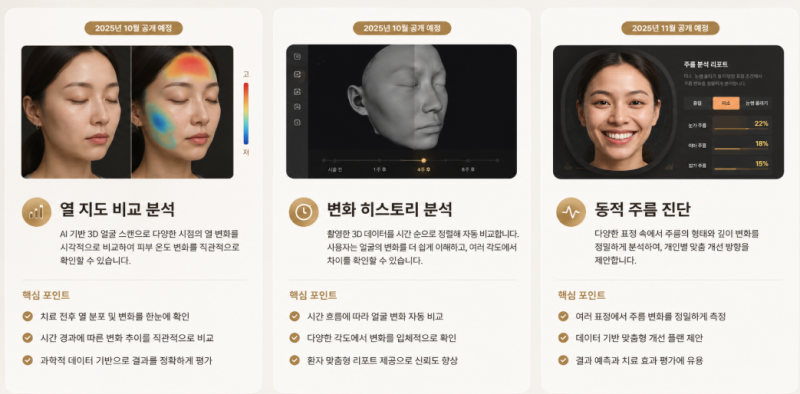
Skin Diagnosis: How AI Analyzes Skin Conditions Hard to Detect with the Naked Eye
Hello.
This is Girin Plastic Surgery.
If you've been constantly moisturizing because your skin feels dry,
yet that tight, pulling sensation still lingers,
the root cause might not actually be a simple lack of hydration,
but rather an issue with your skin barrier or sebum balance.
To objectively assess skin conditions that are difficult to evaluate with the naked eye alone,
more and more people are recently turning to AI skin diagnostics.
Even within the same age group, one person may worry about pores and sebum,
while another may be primarily concerned with pigmentation or loss of elasticity.
In this way, it can be challenging to accurately determine your skin's true condition
solely by what is visible on the surface.
Recently, in addition to visual consultations,
interest in data-driven skin diagnostics has been steadily rising.
Today, let's explore what insights AI skin diagnosis can provide,
and how these analysis results are utilized
in actual medical consultations.
Skin Has Nuances That the Naked Eye Cannot Fully Detect
Skin conditions can be difficult to gauge accurately
based solely on surface appearance.
For example, you might assume you have oily skin due to surface shine,
when in reality, underlying dehydration is also present.
Subtle pigmentation, redness, pore conditions,
and textural changes are often hard to evaluate thoroughly
using only visual inspection.
For this reason, Girin Plastic Surgery combines professional medical consultations
with AI skin diagnostics to evaluate skin conditions
using objective, measurable data.
By analyzing captured facial images and data across multiple metrics—
including skin age, wrinkles, pores, pigmentation, redness, hydration, sebum,
elasticity, and skin texture—
it helps provide a much more systematic understanding
of your current skin condition.
These analysis results serve as a valuable reference during medical consultations.
Together with the patient's personal concerns,
they are comprehensively reviewed to design tailored treatment programs
aligned with individual skin characteristics and aesthetic goals.
What Can You Discover Through AI Skin Diagnosis?
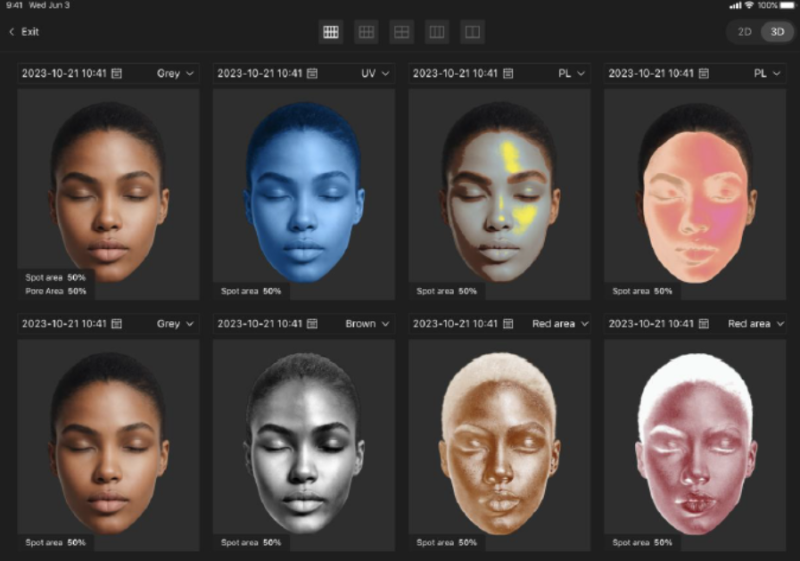
AI skin diagnosis involves capturing high-resolution facial images
and visually analyzing various skin and facial characteristics based on those images.
The analysis process evaluates
the following key parameters:
Skin Age
Wrinkles
Pores
Pigmentation
Redness
Hydration
Sebum
Elasticity
Skin Texture
These results are not meant to simply label your skin as "good" or "bad."
Instead, they serve as a reference to see which areas are relatively prominent
and how closely the objective data aligns
with your personal skin concerns.
Notably, it allows you to observe skin characteristics that were previously unnoticeable to the naked eye
in the form of clear images and numerical values,
making it much easier to intuitively understand
your current skin status.
What Is "Skin MBTI"?
At Girin Plastic Surgery, the Cellogic AI Facial Analysis Program
also provides a "Skin MBTI" profile based on your diagnostic results,
helping you easily understand your unique skin characteristics.
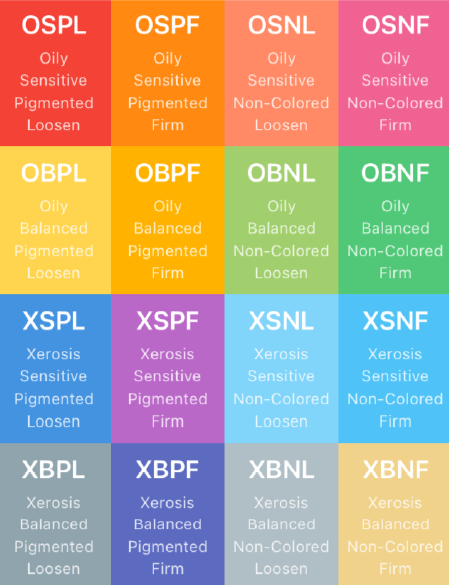
Rather than categorizing skin simply as dry or oily,
the Skin MBTI synthesizes multiple diagnostic parameters
to help you grasp your skin's profile in a more relatable, familiar way.
However, the Skin MBTI alone does not dictate your treatment plan.
Even individuals classified under the same type
may have different areas of concern, skin conditions,
and aesthetic goals.
Therefore, the results should always be evaluated
in conjunction with a thorough medical consultation.
Discovering Your Personal Color
During the AI facial analysis process, you can also determine
your personal color profile based on your skin tone.
Personal color serves as a helpful reference for understanding shades
that harmonize naturally with your skin tone,
and can be useful when selecting
makeup or clothing colors.
However, because lighting, shooting environments,
and immediate skin conditions can influence the outcome,
it should be viewed as a practical guideline
rather than an absolute rule.
The Cellogic program is designed to examine both skin health and facial chromatic attributes together,
aiming to deepen your overall understanding
of your face and skin.
AI Analysis Alone Does Not Determine Procedures
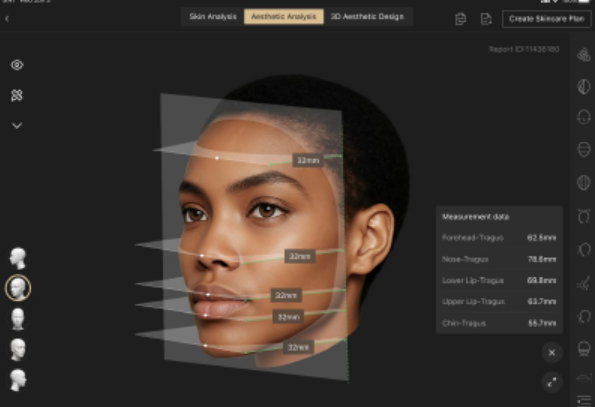
The most crucial aspect of AI skin diagnosis
is not just the raw data, but how that data is interpreted.
While AI plays an essential role in visualizing skin conditions
through images and metrics,
a specific procedure is never determined automatically
based solely on the algorithmic output.
Medical professionals take into account all of the following:
The patient's actual skin concerns
AI skin diagnosis results
Past aesthetic procedures and skincare history
Current skin condition and barrier health
Desired treatment outcomes
Daily lifestyle and available recovery time
Potential allergic reactions or sensitivities
Thus, combining AI diagnostic insights with professional medical judgment
is essential to designing an individualized, effective
treatment plan.
How Does the Cellogic AI Facial Analysis Program Work?
The Cellogic AI Facial Analysis Program at Girin Plastic Surgery
follows a streamlined process: imaging, analysis, medical review, and personalized treatment planning.
First, we review your current skin concerns and daily skincare habits
before taking facial images.
Next, the captured images are processed to analyze skin and facial features,
generating a comprehensive report on skin age, wrinkles, pores, pigmentation, redness,
hydration, sebum, elasticity, and texture.
Using this report as a baseline,
the medical team thoroughly evaluates the patient's concerns
alongside their actual skin condition.
Furthermore, this is not a one-time diagnostic assessment;
follow-up images can be taken under the exact same standard conditions after treatments
to compare with previous results.
This allows us to track visible improvements in skin health
and make precise adjustments to ongoing maintenance plans.
Skin Diagnosis: The Foundation of Personalized Care
Rather than choosing skincare treatments based solely on online reviews or trending fads,
it is far more important to first understand your skin's current baseline.
AI skin diagnosis is a powerful tool that reveals subtle skin traits
that are difficult to detect with the naked eye through clear images and data.
When combined with in-depth medical consultations,
it enables a comprehensive, multi-dimensional assessment
of your skin concerns and conditions.
Keep in mind that analysis results are a reference tool to understand your baseline,
and actual treatment directions must always be determined
through thorough professional consultation.
Through the Cellogic AI Facial Analysis Program,
Girin Plastic Surgery seamlessly integrates skin condition analysis, medical consultation,
personalized care planning, and post-treatment tracking into one cohesive journey.
If you are curious about the true state of your skin,
starting with an objective AI skin diagnosis
can be the ideal first step.
Frequently Asked Questions
What parameters can be checked through AI skin diagnosis?
You can check a wide range of factors, including skin age, wrinkles, pores, pigmentation, redness, hydration, sebum, elasticity, and skin texture. Based on high-resolution facial images, subtle skin characteristics that are difficult to evaluate with the naked eye are analyzed and presented in numerical data and visual images.
Are customized treatments decided purely by the AI diagnosis results?
No, procedures are never automated based purely on analysis data. AI metrics serve as diagnostic reference material for medical professionals, who comprehensively evaluate the patient's personal concerns, past treatment history, current skin barrier condition, and recovery schedule to design a safe, tailored plan.
What is Skin MBTI and how is it used?
Skin MBTI is a synthesized indicator that categorizes individual skin characteristics into intuitive, easily understandable profiles. Moving beyond basic classifications like dry or oily, it helps patients gain an approachable understanding of their skin. Treatment directions are still comprehensively determined through consultation with medical staff.
Can I also discover my personal color through AI skin diagnosis?
Yes, by analyzing facial skin tones, personal color information can also be identified. This is useful as a reference when selecting makeup or clothing palettes. However, because ambient lighting and temporary skin conditions can affect the outcome, it should be regarded as a helpful guide rather than an absolute rule.
Can changes after skincare treatments be tracked and compared with AI diagnosis?
Yes, follow-up images can be captured under identical imaging criteria to compare directly with previous records. The Cellogic AI Facial Analysis Program is not a one-off test; it tracks progress using objective data and images, enabling precise adjustments to subsequent maintenance treatments.