2026-09-15
What Is Soft Tissue Contouring? A Solution for Facial Sagging and Blurry Jawlines
Discover how soft tissue contouring refines sagging cheeks and blurry jawlines by addressing tissue position and volume without bone surgery.
What Is Soft Tissue Contouring? A Solution for Facial Sagging and Blurry Jawlines
Hello.
This is Girin Plastic Surgery.
Have you ever felt that your face looks wider even though your weight hasn't changed, or noticed your cheeks sagging and your jawline becoming undefined?
In such moments, it is easy to assume you simply gained facial fat; however, facial contours are not determined solely by the volume of fat.
The position and volume of the soft tissues beneath the skin also significantly impact facial curves and jawlines.
Soft tissue contouring is a procedure designed to refine facial contours by focusing not on the facial bone structure, but on the position and volume of the soft tissues beneath the skin.
Today, let's explore what soft tissue contouring is and how the non-incisional approach differs.
Why Soft Tissue Affects Facial Contours
When people think of facial contouring, they often imagine bone structures like the cheekbones or jaw first.
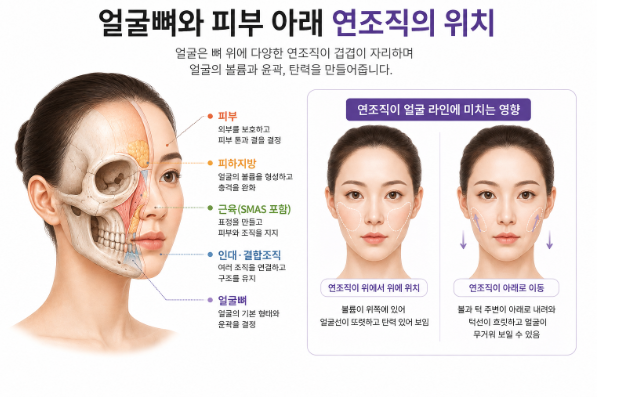
However, an actual face consists of multiple layers resting over bone, including skin, subcutaneous fat, and muscle tissue.
In particular, when soft tissues around the cheeks shift downwards, volume gathers in the lower face, causing the jawline border to blur, while areas that originally held volume can appear hollowed out.
Therefore, when evaluating facial lines, it is essential to look not only at the facial bones, but also at how the position and volume of the soft tissues are distributed.
How Is Soft Tissue Contouring Performed?
Soft tissue contouring is not simply pulling a single part of the face upwards.
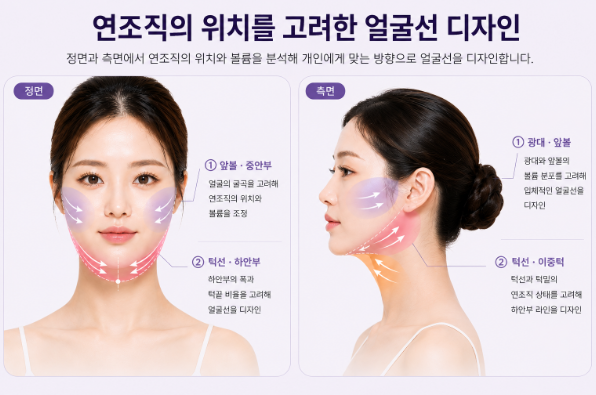
It involves evaluating the position of the front and lateral cheeks, the flow leading toward the jawline, and overall facial contours from the front, 45-degree angle, and profile view.
From there, facial lines are designed by determining the direction to adjust sagging tissue and deciding how to replenish areas lacking volume.
The overall design varies depending on which tissues are adjusted, in which direction, and how the facial volume and lines are interconnected.
What Is Different About Non-Incisional Soft Tissue Contouring?
Soft tissue contouring can be approached in various ways depending on facial conditions and desired changes.
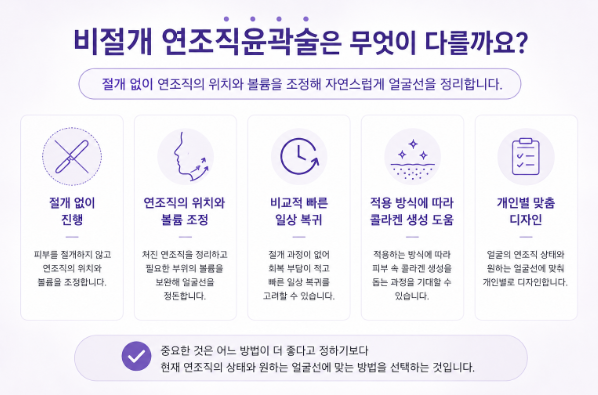
While some methods manage soft tissues more directly, non-incisional soft tissue contouring is a non-surgical technique that refines facial contours by repositioning and adjusting soft tissue volume without skin incisions.
Because it involves no incisions, the recovery burden is relatively light, making it an excellent option for those seeking a quick return to daily life.
Furthermore, depending on the technique applied, it can also stimulate collagen production within the skin.
Rather than deciding which approach is universally superior, what matters most is selecting the method tailored to your current soft tissue condition and your desired facial contour.
Consider This If You Have Any of the Following Concerns:
A feeling that your cheeks have drooped lower than before
A blurry or poorly defined jawline
A lower face that appears heavy
A face that looks wider from the front
Simultaneous concerns regarding facial sagging and volume loss
Even with similar jawline concerns, soft tissue positioning and volume differ from person to person; thus, it is crucial to assess your current facial condition before deciding on a treatment plan.
Frequently Asked Questions About Soft Tissue Contouring
Q. Is a blurred jawline related to soft tissue?
When tissues around the cheeks shift downward, the jawline perimeter can appear blurred. In such cases, rather than assessing the jawline alone, the position of soft tissues transitioning from the cheeks down to the jawline should be evaluated together.
Q. How long is the recovery period for non-incisional soft tissue contouring?
Because non-incisional soft tissue contouring does not involve surgical incisions, recovery is relatively fast, allowing a return to daily routines in about 1 to 3 days. However, recovery can vary depending on the technique, scope, and individual condition, so it is best to adhere to the post-procedure guidelines provided.
Q. Does this procedure alter facial bones?
No. Soft tissue contouring does not alter the underlying facial bones; instead, it refines facial lines by focusing on the soft tissues underneath the skin.
Soft Tissue Contouring: First Identify Why Facial Contours Changed
Facial contours depend not only on bone structure but also on the positioning and volume of the underlying soft tissue.
Soft tissue contouring assesses the current placement and distribution of soft tissues to plan an approach customized to your facial condition and aesthetic goals.
If your cheeks appear lower than before or your jawline feels indistinct, it is essential to evaluate the position of your soft tissues and overall facial balance rather than focusing solely on facial fat volume.