2026-10-02
What Is Soft Tissue Contouring? Why a Face Looks Big Isn’t Always About the Bone
Discover why a large face isn't just about bones. Learn how Soft Tissue Contouring refines facial volume, skin, fat, muscle, and SMAS without bone surgery for balanced, 3D facial lines at Girin Plastic Surgery.
What Is Soft Tissue Contouring? Why a Face Looks Big Isn’t Always About the Bone
Hello.
This is Girin Plastic Surgery.
When you feel that your face looks big, what is the first cause that comes to mind?
Many people first think of their facial bones, saying things like "my cheekbones are too prominent" or "my jawbone is too wide."
As a result, quite a few believe that bone shaving is essential to make the face smaller.
However, the actual size and overall impression of a face are not determined by facial bones alone.
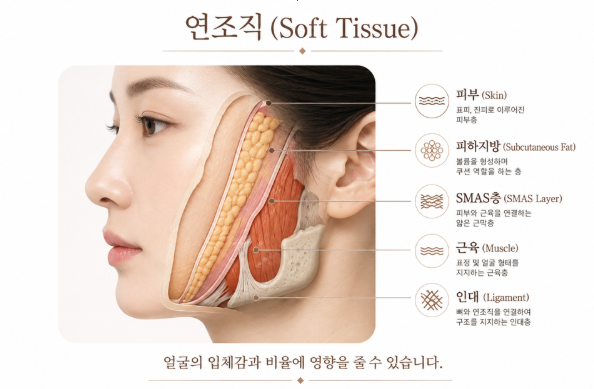
This is because the soft tissues that make up the face—such as skin, fat, muscle, and the SMAS layer—also significantly affect facial volume, facial contours, and overall facial proportions.
Recently, an increasing number of people are showing interest in the concept of Soft Tissue Contouring with these factors in mind.
Today, we will explore what Soft Tissue Contouring is and why we must examine soft tissues when identifying the reasons a face appears large.
What is soft tissue, and why is it important?
What is soft tissue, and why is it important? Girin Plastic Surgery
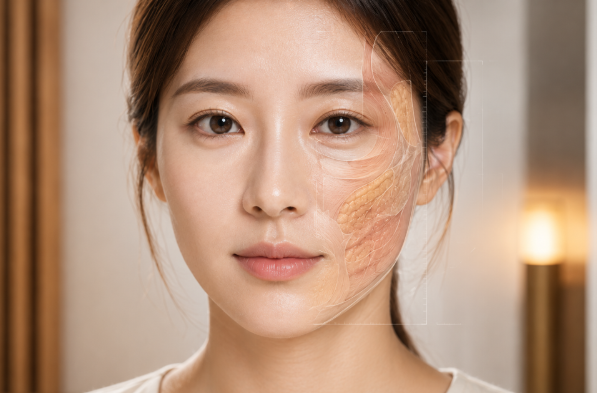
Soft tissue is a collective term for the skin, fat, muscle, SMAS, ligaments, and other tissues that comprise the face.
While it may seem on the surface that facial bones define the shape, the actual facial contours we see are heavily influenced by the soft tissues.
For instance, even with the exact same skeletal framework, a face may look wider or, conversely, slimmer depending on fat thickness, muscle development, and the degree of skin laxity.
In particular, the SMAS layer is an essential tissue located between the skin and muscle, known to play a crucial role in facial movement and structural support.
In other words, to truly understand facial appearance and impressions, it is vital to examine not only the bones but also the soft tissues.
What is the concept behind Soft Tissue Contouring?
What is the concept behind Soft Tissue Contouring? Girin Plastic Surgery
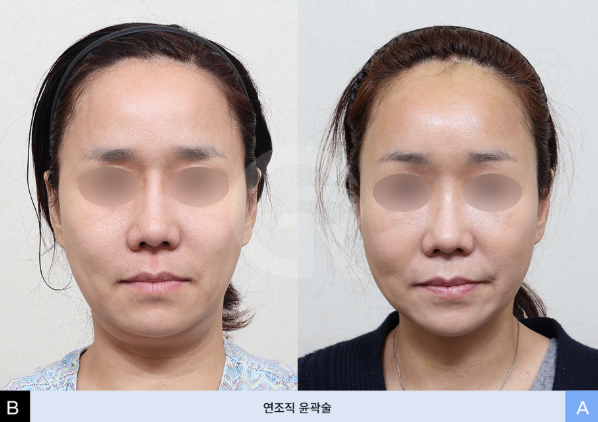
Soft Tissue Contouring is not a surgery that cuts or relocates facial bones.
Without shaving facial bones, it is a comprehensive lifting concept that reduces facial volume and refines facial contours by taking into account the position and volume of soft tissues, including skin, fat, muscle, and SMAS.
Its defining characteristic is that it considers the balance of the entire face rather than merely changing a single area.
The key point here is that we do not search for the cause of a large face solely in the bones.
Because facial volume and contours can vary based on the condition of soft tissues, an accurate analysis of the underlying cause must come first.
The reasons a face looks large vary from person to person
The reasons a face looks large vary from person to person Girin Plastic Surgery
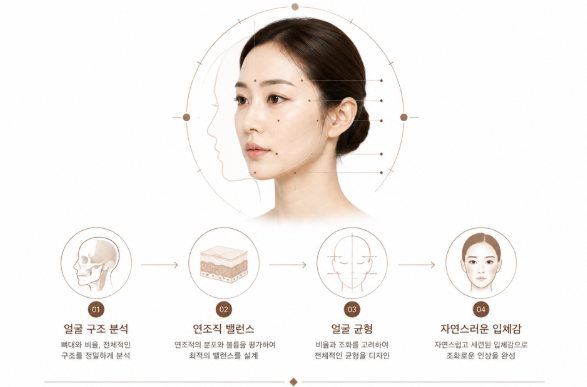
Even when people share the same concern—"my face looks big"—the underlying causes are not all identical.
For some, the structure of the facial bones may be the primary factor; for others, fat distribution, muscle development, or soft tissue volume may contribute to the impression of a larger face.
That is why Soft Tissue Contouring emphasizes the initial process of analyzing facial structures and assessing soft tissue conditions alongside facial proportions.
Following this thorough assessment, a customized treatment plan is formulated to address each individual's unique facial structure and concerns.
Facial contours depend on 'balance'
Facial contours depend on 'balance' Girin Plastic Surgery

We spend far more time viewing other people's faces from a 45-degree angle or from the profile than straight from the front.
Therefore, the overall impression of a face depends not only on its width, but also on how the facial lines connect and where volume is situated.
When soft tissues are evenly and harmoniously distributed, the facial lines flow more naturally, creating a balanced and proportionate facial appearance.
Conversely, if soft tissue volume is disproportionately prominent in certain areas, it can make the face appear wider or larger than it actually is.
Cases where examining facial structure and soft tissues together is beneficial
Cases where examining facial structure and soft tissues together is beneficial Girin Plastic Surgery
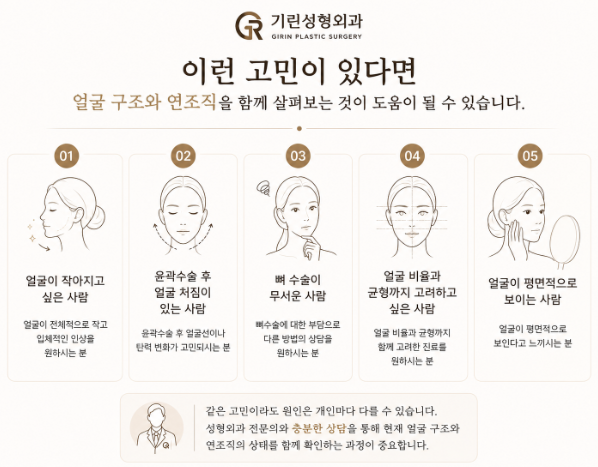
If you have any of the following concerns, evaluating the condition of your soft tissues alongside your facial bones can be very helpful:
When you desire an overall smaller, more three-dimensional facial contour
When you are concerned about loss of elasticity or volume changes after facial contouring surgery (bone surgery)
When you wish to consult on alternative approaches before committing to bone-altering surgery
When you want treatment that takes overall facial proportions and harmony into account
When your face appears flat or lacks defined dimension
Because the root causes of these concerns vary individually, an in-depth consultation with a board-certified plastic surgeon to evaluate both current facial structures and soft tissue status is crucial.
A board-certified plastic surgeon comprehensively analyzes facial structures to design personalized plans
A board-certified plastic surgeon comprehensively analyzes facial structures to design personalized plans Girin Plastic Surgery
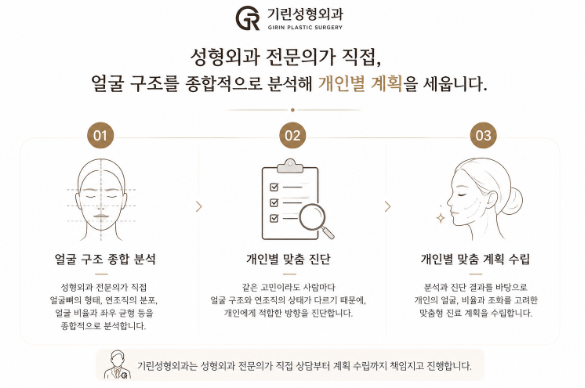
Soft Tissue Contouring begins with a comprehensive analysis of the entire facial structure and balance, rather than focusing on a single isolated feature.
During consultation, a board-certified plastic surgeon directly assesses facial bone morphology, soft tissue distribution, facial proportions, and bilateral symmetry.
Since facial structures and soft tissue conditions vary from patient to patient even with similar aesthetic concerns, conducting a holistic evaluation before establishing a personalized treatment plan is paramount.
At Girin Plastic Surgery, our board-certified plastic surgeons personally analyze facial anatomy to establish tailored care plans that respect each individual's unique proportions and facial harmony.
Through thorough diagnosis and comprehensive consultations, we accurately identify your facial characteristics and map out the most suitable direction together.
Frequently Asked Questions
Is Soft Tissue Contouring a bone-shaving procedure?
No. Soft Tissue Contouring does not cut, shave, or reposition facial bones. It is a comprehensive lifting concept that refines facial lines and reduces excess volume by adjusting the position and volume of soft tissues—such as skin, fat, muscle, and SMAS—without touching the bone.
What exactly constitutes facial soft tissue?
Soft tissue refers to the skin, subcutaneous fat, muscles, SMAS layer, and retaining ligaments that make up the face. Even with identical bone structure, variations in soft tissue thickness, distribution, and elasticity can drastically alter outward facial contours and perceived face size.
Who is a good candidate for Soft Tissue Contouring?
It is recommended for individuals seeking to enhance facial size and balance without undergoing bone surgery, as well as those experiencing sagging or volume shifts following facial bone contouring. It is also well-suited for anyone whose face appears flat or lacks three-dimensional balance.
Why should we look at soft tissues as the cause of a wide or large face?
Soft tissues directly determine tangible facial volume and outline definition. Localized fat deposits, masseter muscle hypertrophy, or skin laxity can make a face look significantly wider or heavier, even when the underlying skeletal framework is relatively small.