2026-10-03
Why Your Face Looks Wide: Facial Asymmetry Could Be the Cause
A wide face and sagging cheeks are often caused by underlying facial bone asymmetry rather than excess fat, requiring tailored bone contouring for lasting balance.
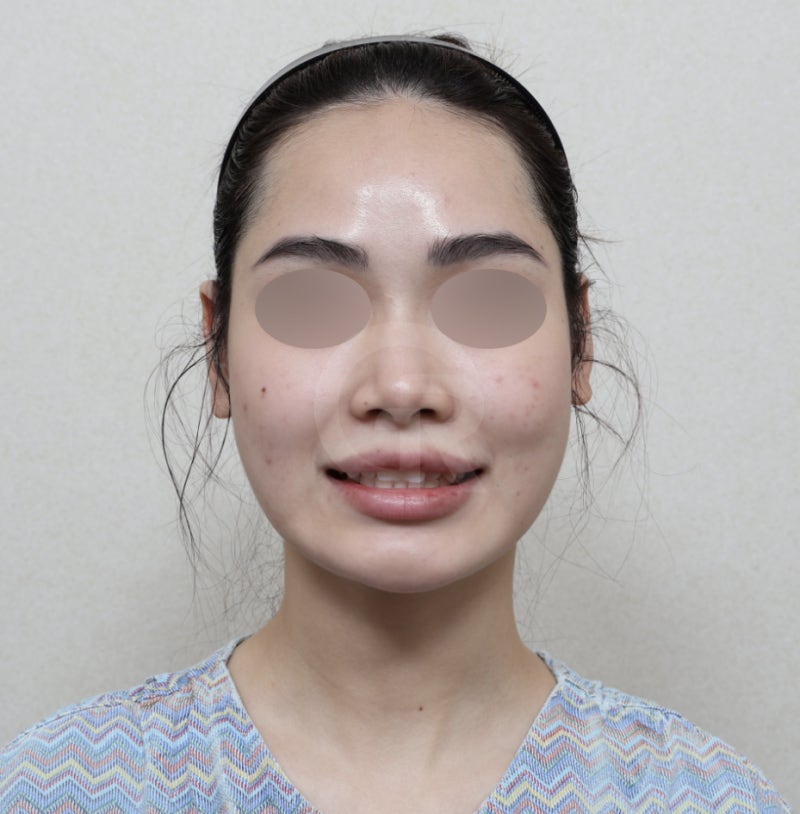

Many patients visit the clinic with concerns such as a wide-looking face, sagging jawline, droopy cheeks, or hollow temples. Because of this, it is common for people to decide on a specific procedure before coming in for a consultation. However, when we analyze a patient's face in the clinic, the visible concern does not always align with the actual root cause. Through detailed diagnostics, we often find that rather than an issue with fat or soft tissue, sagging can occur due to the underlying facial bone structure—such as left-right facial asymmetry, the angle and projection of the cheekbones, the jawline's contour, or flaring of the mandible.
The patient featured here also initially visited seeking soft tissue contouring, but ended up undergoing zygoma (cheekbone) reduction combined with New V-line surgery (long-curve osteotomy). Her primary concerns were drooping cheek fat around the mouth and a wide facial appearance. However, through consultation, physical examination, and 3D CT analysis, the core underlying issue was identified as contour asymmetry.
Asymmetry originating from the cranial shape disrupted the facial midline, affecting both the cheekbones and mandibular jawline. Therefore, the surgery focused on restoring balance and symmetry across the entire face.
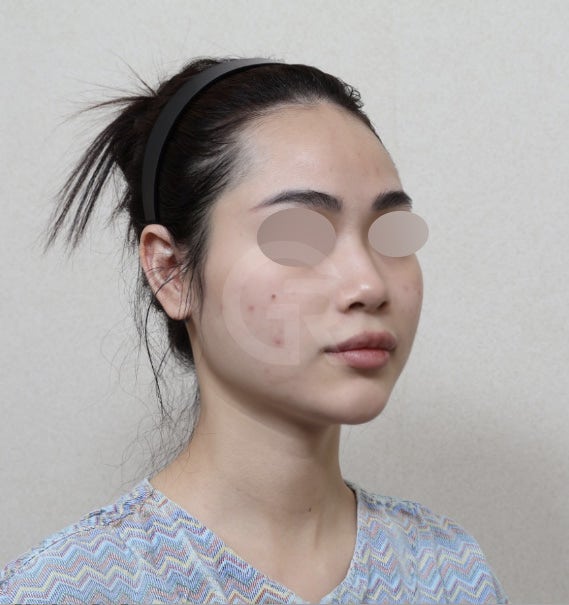
First, in cheekbone surgery, identifying where to place the facial "high point" was crucial. The high point can be considered the focal point that defines three-dimensionality and youthful firmness in the face. Because this support had collapsed, causing the midface to appear droopy, we aimed to properly position this point while reducing excessive lateral cheekbone width. The goal was to achieve a smaller, more sculpted face with healthy skin tension.
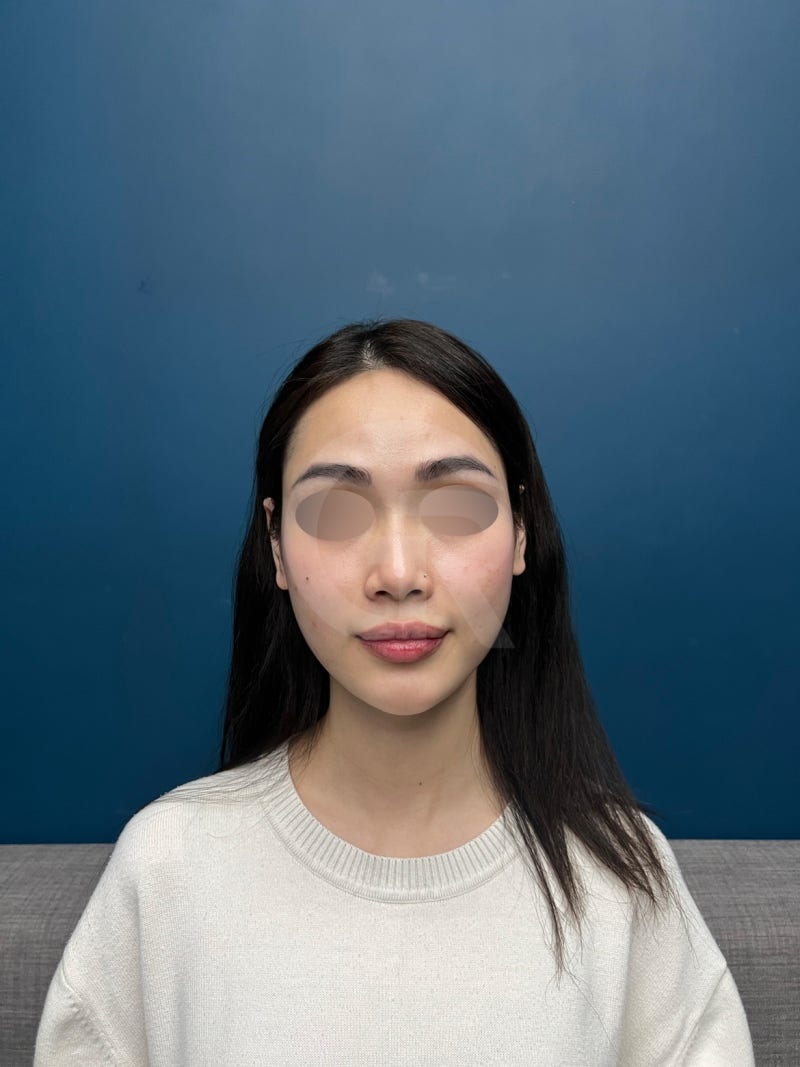
Additionally, because the patient desired a soft, feminine, and compact face similar to actress Park Min-young, a long-curve osteotomy was performed. Of course, replicating a specific celebrity's face is neither possible nor desirable, as every face has its own optimal lines and angles. However, through thorough consultation, we understood that her ultimate goal was not an excessively sharp V-line, but rather a reduction in facial width, softer lines, and a well-balanced facial profile.

By refining the contour running from the mandibular angle below the ear to the chin, and taking into account the width of the chin seen from the front, we achieved the most natural and stable contour line. In an asymmetric face, it is essential not to reduce both sides identically; instead, a customized surgical plan is required based on the unique shape, thickness, and projection direction of the bone on each side. Furthermore, accounting for the surrounding soft tissues is necessary to ensure stable and harmonious long-term results.

As demonstrated, correcting the underlying skeletal structure may be more critical for some patients, while for others, soft tissue contouring alone can refine the facial silhouette. Even when patients share the same concern of a wide or empty face, the causes can vary widely—ranging from subcutaneous fat, skin elasticity, and masseter muscles to salivary glands, skeletal structure, and asymmetry. Therefore, a comprehensive, multi-dimensional analysis prior to surgery is indispensable.

More than a year after surgery, her face remains beautifully balanced and defined. Because she had not anticipated needing bone contouring surgery, reaching a decision took considerable time, but she shared that she has absolutely no regrets about her choice.

If you are struggling with facial sagging, hollows, or an overly broad appearance, rather than deciding on a procedure in advance, we strongly recommend undergoing a comprehensive diagnosis to find the right surgical direction tailored to your unique anatomy.
Frequently Asked Questions
What is the main cause of a wide-looking face?
Beyond simple soft tissue issues, left-right skeletal asymmetry or an excessively wide mandibular line can be primary causes. What appears to be sagging cheek fat or excess tissue on the surface is often revealed through 3D CT analysis to be cheekbone projection or underlying bone asymmetry.
What is the "high point" in cheekbone surgery?
It refers to the key focal point that creates dimension and youthful firmness in the midface. If this point collapses or lacks support, the midface can appear flat and saggy. Properly positioning this high point while reducing lateral cheekbone width restores natural volume and improves skin tension.
Is the exact same amount of bone removed from both sides in facial asymmetry surgery?
No. The surgical approach is customized independently for each side depending on the shape, thickness, and projection angle of the bone. For an asymmetrical face, removing the same amount from both sides would preserve or worsen the imbalance; asymmetrical resection is required to create overall symmetry.
Can bone surgery be necessary to correct sagging cheeks?
Yes. If structural skeletal imbalance or asymmetry is the root cause of the tissue sagging, facial contouring surgery may be required. While soft tissue contouring is sufficient for some patients, combining zygoma reduction or a long-curve osteotomy is necessary when the sagging is caused by bone structure.